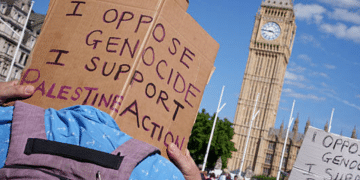
Britain’s recognition of the Palestinian state: a correction of history or an escape from responsibility?

The Palestinian people needed nothing more than the Balfour Declaration to know that Britain had laid the foundation for their century-long tragedy. The declaration, issued in 1917, opened the door to the Zionist project and later led to the establishment of the State of Israel on the ruins of the Palestinian people and the displacement of the majority of them from their land. Today, more than a century later, Britain’s recognition of the Palestinian state is a belated step with symbolic and political dimensions, but it also opens the door to questions about its real value in light of the ongoing occupation.
Belated recognition of Palestine after a historic crime
Palestinians realize that British recognition, whatever its political weight, cannot erase the impact of the Balfour Declaration. That promise was not a passing political statement, but a colonial decision that paved the way for the usurpation of Palestine and the displacement of its people, and Palestinians continue to live with its repercussions to this day. Therefore, many view the new recognition as a “belated correction” that falls short of bearing historical responsibility. Recognition in itself is a symbolic step, but Britain must accompany this position with practical measures that acknowledge its initial crime and work to remedy it.
The current political dimension
Politically, the recognition carries implications that cannot be underestimated. Britain is one of Israel’s most prominent traditional allies and one of the most influential countries within and outside the European Union. Its decision marks a shift in Western political sentiment, which has grown impatient with the policies of the occupation, especially after the brutal crimes committed in Gaza over the past two years. In this context, the recognition can be seen as a means of exerting pressure on Israel and a clear message that the occupation no longer enjoys the same political cover it has been accustomed to over the past decades.
However, caution is needed; recognition does not necessarily mean that Britain will radically change its practical positions. The question remains: Will London move from political recognition to exerting actual pressure on Israel by supporting accountability resolutions, imposing sanctions, or halting arms exports? Or will the recognition remain a mere symbolic declaration for diplomatic consumption?
Between symbolism and reality on the ground for the Palestinian state
On the ground, recognition does not change the reality of the occupation. Gaza continues to live under bombardment, siege, and mass death, and the West Bank is subjected daily to waves of settlement and displacement. Palestinians therefore fear that British recognition will remain a symbolic step that does not translate into tangible change in their daily lives. Nevertheless, the symbolism of recognition remains important, as it adds to the accumulation of international recognition that reinforces the legitimacy of the Palestinian state in the face of Israeli propaganda.
Moral and legal responsibility
Britain’s recognition should not be seen merely as a political move, but as a moral duty that is more than a century overdue. As the author of the Balfour Declaration and the mandatory power in Palestine until 1948, Britain bears direct responsibility for the suffering of the Palestinians. Therefore, any recognition must be accompanied by a formal apology and moral and political compensation for the historical damage inflicted on the Palestinian people. Unless this happens, the recognition will remain incomplete in the eyes of the Palestinians, closer to a whitewash than to an assumption of responsibility.
What comes after recognition of the Palestinian state?
The most prominent challenge now lies in how Palestinians will capitalize on this recognition. Rather than considering it a “symbolic victory,” it should be a starting point for broad political and diplomatic moves to pressure other countries to recognize the Palestinian state and its inalienable national rights. It is also necessary to use this recognition as a tool to strengthen legal proceedings against Israel in international courts, especially in light of the clear war crimes and genocide committed by the occupying army.
Between hope and disappointment
Ultimately, Palestinians cannot ignore the great symbolism of this recognition, but at the same time, they realize that it does not restore their land or stop the massacre. The hope is that it will mark the beginning of a new path, with Britain beginning to review its colonial legacy and moving towards more effective roles in holding Israel accountable and supporting Palestinian rights. The disappointment will come if the recognition remains just another line in the diplomatic record books, with no impact on the ground and no change in the balance of power.
Britain’s recognition of the Palestinian state more than a century after the Balfour Declaration represents a watershed moment, but one that is marred by delay and inadequacy. Palestinians see it as a welcome step, but it does not absolve Britain of its historical responsibility or fulfill their full rights. Between symbolism and reality, the real test remains: Will Britain dare to turn recognition into a policy of pressure that will end the occupation and the ongoing tragedy, or will it remain a mere moral declaration that changes nothing?
Featured image via the Canary