• Donate
  • Login
Saturday, December 6, 2025
  • Login
  • Register
Canary
Cart / £0.00

No products in the basket.

MEDIA THAT DISRUPTS
  • UK
  • Global
  • Opinion
  • Skwawkbox
  • Manage Subscription
  • Support
  • Features
    • Health
    • Environment
    • Science
    • Feature
    • Sport & Gaming
    • Lifestyle
    • Tech
    • Business
    • Money
    • Travel
    • Property
    • Food
    • Media
No Result
View All Result
MANAGE SUBSCRIPTION
SUPPORT
  • UK
  • Global
  • Opinion
  • Skwawkbox
  • Manage Subscription
  • Support
  • Features
    • Health
    • Environment
    • Science
    • Feature
    • Sport & Gaming
    • Lifestyle
    • Tech
    • Business
    • Money
    • Travel
    • Property
    • Food
    • Media
No Result
View All Result
Canary
No Result
View All Result

Pesticide sales remain high across the EU despite evidence of their harm, a new report reveals

Glen Black by Glen Black
4 October 2025
in Global, News
Reading Time: 3 mins read
171 1
A A
0
Home Global
Share on FacebookShare on TwitterShare on BlueskyShare via WhatsAppShare via TelegramShare on Threads

The European Environment Agency (EEA) urged EU states on 26 April to reduce pesticide usage. The warning came as it published findings that one or more pesticides were detected above thresholds of concern at 22% of all monitoring sites in rivers and lakes across Europe in 2020.

The EEA’s report said that:

From 2011 to 2020, pesticide sales in the EU-27 remained relatively stable at around 350,000 tonnes per year.

Pesticides are widely used in the agricultural sector. People also use them for forestry, along roads and railways, and in urban areas such as public parks, playgrounds, and gardens.

The insecticide imidacloprid and the herbicide metolachlor showed the highest absolute number of exceedances across Europe. These were primarily in northern Italy and northeastern Spain. Meanwhile, in groundwater, the herbicide atrazine caused the most exceedances. That’s despite the EU banning it in 2003.

Pesticides are deeply damaging

The report said human exposure to chemical pesticides, primarily through food but also through the air in agriculture-intense regions, is linked to a range of problems. They include the development of cardiac, respiratory and neurological diseases, as well as cancer.

The EEA added that:

Worryingly, all of the pesticides monitored… were detected in higher concentrations in children than in adults.

Researchers conducted a separate study in Spain, Latvia, Hungary, Czech Republic and the Netherlands between 2014 and 2021. They detected at least two pesticides in the bodies of 84% of survey participants.

Driven by agriculture

Pesticide pollution is also driving biodiversity loss across the continent, causing significant declines in insect populations and threatening the critical role they play in food production. A German study cited in the EEA report found a 76% decline in flying insects in protected zones over a period of 27 years. It identified pesticides as one of the reasons for the decline.

There was some variation in the sales volume between states. In 11 countries, pesticide sales decreased between 2011 and 2020. The biggest drops were in the Czech Republic, Portugal, and Denmark. On the other hand, Latvia and Austria saw the strongest rates of increase in terms of sales.

Germany and France were responsible for the sharpest rise in sales volumes. They, along with Spain and Italy, accounted for the highest volumes sold for most groups of active substances. The four countries are also the EU’s biggest agricultural producers.

Other methods are available

According to the EEA, 83% of agricultural soils tested in a 2019 study contained pesticide residues. This is a result of modern food production systems, which rely on high volumes of chemical pesticides to ensure crop yield stability and quantity.

However, the EU body said other methods are available to achieve the same results:

We could reduce our dependency on chemical pesticides to maintain crop yields and our overall pesticide use volumes by shifting to alternative models of agriculture, such as agroecology

It is now urging the EU’s 27 members to cut dependency on pesticides.

In the UK, the government recently approved the use of bee-killing thiamethoxam for the third year in a row. The “emergency authorisation” came after lobbying by the National Farmers’ Union.

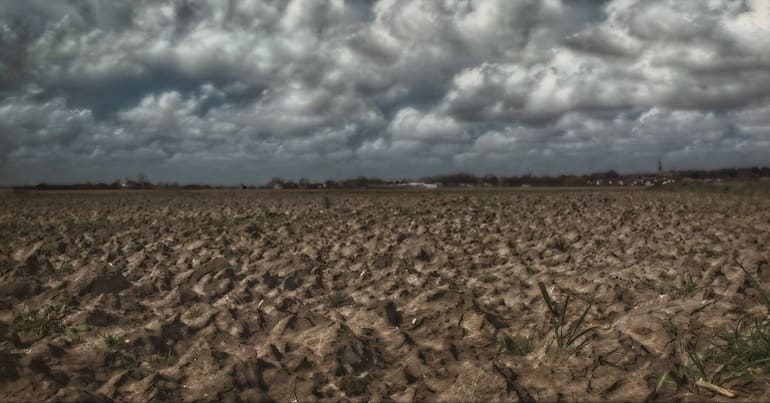
Featured image via Stefan Thiesen/Wikimedia Commons

Additional reporting by Agence France-Presse
Tags: EU
Share128Tweet80ShareSendShareShare
Previous Post

Prevent makes doctors, teachers, and other professionals carry out counter-terrorism work

Next Post

Global warming made Horn of Africa drought possible, according to new report

Next Post
A drought-ridden landscape

Global warming made Horn of Africa drought possible, according to new report

Sudanese military.

Sudan's civil war may be partly fought with British military equipment

HDP in Amed; Turkish

Turkish police are harassing and arresting Kurdish leftists in the run up to the election

A damaged Russian tank

Global military expenditure hits record highs in boon for arms traders

Zoey Zephyr

Trans lawmaker Zooey Zephyr banned from Montana assembly chamber for speaking out against transphobic bill

Please login to join discussion
Israel
Analysis

Israel executes two unarmed Palestinians after they surrendered

by Charlie Jaay
28 November 2025
Palestine Action
Analysis

Disabled arrestee refuses to be silent, saying “freedom is not to be taken from us without a fight”

by Ed Sykes
28 November 2025
Syria
Analysis

Syria: Fragile peace after Bedouin murders ignite sectarian tensions

by Alex/Rose Cocker
28 November 2025
Barghouti
Skwawkbox

Video: Barghouti honoured with new mural after 24 years as Israel’s political prisoner

by Skwawkbox
28 November 2025
palestine action
Analysis

Shocking new report reveals what really drove the government’s crackdown on Palestine Action

by The Canary
28 November 2025
  • Get our Daily News Email

The Canary
PO Box 71199
LONDON
SE20 9EX

Canary Media Ltd – registered in England. Company registration number 09788095.

For guest posting, contact ben@thecanary.co

For other enquiries, contact: hello@thecanary.co

Sign up for the Canary's free newsletter and get disruptive journalism in your inbox twice a day. Join us here.

© Canary Media Ltd 2024, all rights reserved | Website by Monster | Hosted by Krystal | Privacy Settings

Welcome Back!

Login to your account below

Forgotten Password? Sign Up

Create New Account!

Fill the forms below to register

All fields are required. Log In

Retrieve your password

Please enter your username or email address to reset your password.

Log In
  • UK
  • Global
  • Opinion
  • Skwawkbox
  • Manage Subscription
  • Support
  • Features
    • Health
    • Environment
    • Science
    • Feature
    • Sport & Gaming
    • Lifestyle
    • Tech
    • Business
    • Money
    • Travel
    • Property
    • Food
    • Media
  • Login
  • Sign Up
  • Cart