Political prisoner Kamran Ahmed hospitalised in third week of hunger strike

Hunger-striker Kamran Ahmed, one of the ‘Filton 24‘ anti-genocide activists imprisoned for over a year without trial, has been hospitalised, due to his rapidly deteriorating health.
Kamran, who is being held at London’s Pentonville prison, was arrested in a violent dawn raid in November 2024. He was accused of involvement in an intervention by non-violent direct action group Palestine Action (PA) at the Filton facility of Israeli arms manufacturer Elbit Systems. During the action, which took place before the Starmer regime’s ‘proscription’ of PA as a ‘terrorist’ organisation, Israeli quadcopter drones were dismantled by the protesters. This group have since been imprisoned despite not being charged with any terrorist offence.
Hunger strikes over Palestine Action proscription
The trial of the first of the Filton 24 began this week, while others are being made to wait until at least next summer, or potentially as late as 2027.
Ahmed, imprisoned since his arrest and denied bail despite being the sole carer for his parents, joined the Prisoners for Palestine hunger-strike on the 10th November. In doing so he became the sixth prisoner refusing food. An asthma sufferer, he has also been suffering from dizziness, breathing difficulties and chest pains, as well as low blood sugar and dangerously high ketone levels. After more than a year in prison and over two weeks of his hunger strike, six-foot-tall Ahmed’s weight has already fallen by 6 kilos, from 74kg to 68kg. Last Friday, he collapsed with hypoglycaemia – severely low blood-sugar levels.
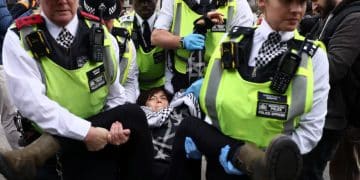
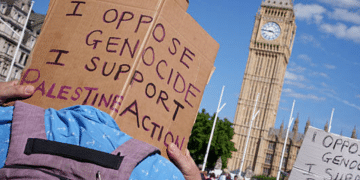
Yesterday afternoon, scores of supporters marched from Pentonville to the Ministry of Justice in Central London to highlight the medical neglect which has led to Kamran’s hospitalisation and to call for the government to respond to the hunger-strikers’ demands. Marchers carried banners reading ‘Drop The Charges’ and ‘Resistance Is Not Terrorism’. Despite the peaceful nature of the march, police responded aggressively – arresting several people and shoving an older woman on crutches to the ground before arresting her.
‘All of this could have been avoided’
Ahmed’s sister Shamina Amal, who organised yesterday’s protest, said:
All of this could have been avoided if the government would have engaged in conversations about the demands, which they are yet to respond to. I am angry, I am sad, I don’t think there is words to put to the pain of a sister who was in a press conference last week stating that I fear the day I get a call to say Kamran has collapsed, and now I am living my worst fear.
I stand by my brother and the demands of the hunger strike, the demands must be met, they are things the government should be doing and I am disgusted that the government has chosen to ignore the hunger strikers with no care or consideration to their sanctity of their health and lives.
Over a hundred medical doctors have written to the Health and Justice Commissioning NHS Team to expressing their growing concern at the state’s mistreatment of the hunger strikers.
Growing support
Despite the indifference of the UK government and corporate or state ‘mainstream’ media to the hunger-strike, support for the prisoners continues to grow, with numerous groups and organisations pledging support including Defend Our Juries, Campaign Against The Arms Trade, CAGE International and Black Lives Matter UK. There have been solidarity protests held outside the prisons holding the hunger-strikers, solidarity action by political prisoners oversea, and letters to the government from MPs Jeremy Corbyn and Zarah Sultana.
Former Palestine Action prisoner Francesca Nadin, speaking on behalf of Prisoners for Palestine, said:
Today, 23 days since the Prisoners for Palestine hunger-strike began, and more than 5 weeks since the British government received notice, Kamran Ahmed became the first of the prisoners to be hospitalised. The callous disregard of the prison authorities, for the health and well-being of the prisoners in their care, has matched that of the British state, with medical negligence being consistent throughout the hunger protest.
To avoid further harm to the quickly deteriorating health of the hunger-strikers, it is imperative that the government addresses the prisoners demands, and engages with them, to bring the protest to an end.”
Featured image via the Canary