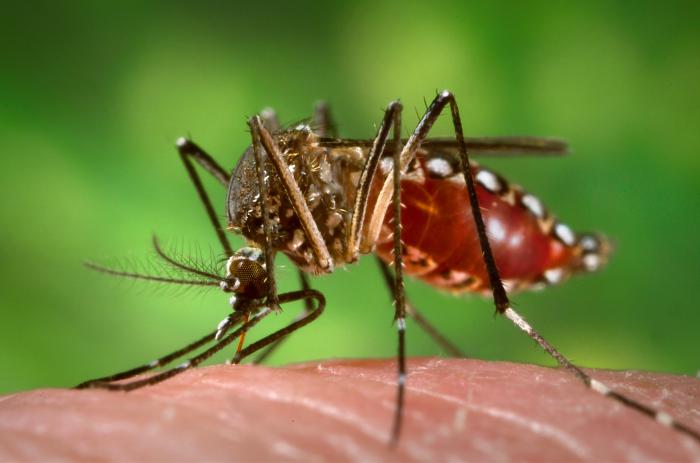
No, Zika virus is not caused by GM mosquitoes

The Zika virus outbreak in parts of South and Central America is absolutely not caused by GM mosquitoes, as reports over the past few days have claimed.
The outbreak is now so serious it has been given the same rating as Ebola by the World Health Organisation (WHO) – it is a “Public Health Emergency of International Concern”.
The virus has spread like wildfire and is associated with a rise in brain abnormalities in newborn babies. There is also a possible link to cases of Guillain-Barré syndrome, an autoimmune disorder that can cause paralysis. The causative effect of Zika has not been identified in either case, though.
Advice has included avoiding new pregnancies in affected areas, a proposal that is now fuelling theories that the virus has been released as a form of ethnic cleansing or population control.
It is, of course, completely natural, when something this awful happens, to look for something or someone to blame. Unfortunately this does little to find a solution and risks doing more harm than good.
The accusation of conspiracy has pointed to British biotech company Oxitec‘s trial releases of genetically modified mosquitoes, in Brazil, Panama, and the Cayman Islands, ahead of the current outbreak of Zika virus.
Professor of Medical Microbiology at Kingston University, Mark Fielder said:
It is highly improbably that GM mosquitoes can in any way be linked to the current Zika virus outbreak.
Oxitec’s spokesperson Matt Warren said
Rather than the GM mosquitoes being implicated in any way in causing the Zika crisis, it is great that science is able to offer reassurance that proven solutions an be deployed to cull the vectors [the mosquitoes] and protect humans.
Well, he would say that, wouldn’t he? But he’s not wrong. Let’s look at the science, for a minute…
Zika virus is not new
Zika virus was discovered in Uganda in 1947, in rhesus monkeys. Subsequently human cases were seen in the region, in 1952. Since then, there have been outbreaks of Zika virus in most areas in which the Aedes mosquitoes circulate – Africa, Asia, the Americas, Asia and the Pacific.
The current outbreak in Brazil started during 2015 and seems to be part of a rapid spread of Zika virus across the globe – hence the recent categorisation from the WHO.
Oxitec’s mosquitoes don’t transmit viruses
Before deploying their GM mosquitoes, Oxitec carried out controlled trials to establish safety and efficacy. The mosquitoes are bred in a controlled laboratory environment.
And here’s the kicker, Oxitec release ONLY male mosquitoes.
Mark Fielder said:
Male mosquitoes do not take blood meals and do not bite humans.
One or two females probably do end up being released by mistake, but they are short lived and their numbers pose virtually no risk of anyone being bitten.
In fact, Mark Fielder says that the numbers of females actually surviving would be considerably lower than any figures from the lab experiments. He said:
In the lab, up to 5% of GM females might also survive but it is unlikely that this number would survive in the harsh conditions of the natural environment.
Traditional methods of control don’t work
There is no treatment or preventative medicine for Zika virus disease.
For most people the illness is short and fairly mild. The problem seems to come in pregnancy where the presence of the virus in newborns with microcephaly – small head and brain – suggests their condition is associated with an infection at some point during pregnancy.
So, right now, the only way to avoid Zika is to avoid being bitten.
Insecticides against Aedes aegypti, the main species of mosquito to carry Zika as well as Dengue and Chikungunya virus, are increasingly ineffective, due to the evolution of resistance in global mosquito populations.
Other control methods include bed nets and getting rid of standing water, where the mosquitoes like to breed.
But these methods alone are not working. Zika has emerged with a vengence and recently there have been significant outbreaks of Chikungunya in the region, too.
Oxitec’s greatest success has been a trial release of their modified male Aedes aegpyti in Mandacaru, Brazil where they achieved a 99% reduction in numbers of the disease-carrying species. The GM males mate with local wild females, producing inviable offspring and so reducing the population.
In the UK, a recent inquiry by the House of Lords Science and Technology Committee recommended that trials of GM insects should be carried out in areas affected by crop pests. This could see other GM species from Oxitec being trialled at home, too.
Okay, so GM mosquitoes didn’t cause it, but what will help with Zika?
There will need to be multiple efforts to control mosquitoes, especially Aedes aegypti. And this will include releases of Oxitec’s “Friendly mosquitoes”, as they are known, locally.
Piraciciba in Brazil will be the world’s first municipality to launch a program with Oxitec. The next phase of the project in the CECAP/Eldorado neighbourhood of Piracicaba is to target mosquito ‘hotspots’ that occur with the rainy season. The aim is to sustain suppression of Aedes aegypti in order to reduce the spread of dengue, chikungunya and Zika virus.
At the same time, the WHO says it is supporting countries to control Zika virus disease in various ways. They focus on bringing the mosquito population down, better diagnostic processes, and detailed surveillance.
There’s no talk yet of a vaccine or treatment but we will be watching closely and reporting on any developments in this area.
Meanwhile the human impact is growing and it’s not clear what the long term implications will be.
The Canary will continue to report on Zika virus as the situation develops – watch this space!
Get involved
- Donate to the Foundation for Children with Microcephaly
- Join United Nations Online Volunteers to donate your expertise via the internet
- If you need to travel to affected areas, take precautions to prevent mosquito bites
Main image via Wikimedia Commons